
Info centre: daily, 08:00 to 16:00

Archaeological and other research gives a clear picture of continuous settlement in Semberija since the New Stone Age, around 5,000 BC. Despite many migrations, wars and changes of state and rule, from the Roman Empire to modern times, the area was probably never fully abandoned.

In the Middle Ages the rulers of Serbia, Hungary and Bosnia fought over the fertile Semberija plain, before the Ottomans and, after them, Austria-Hungary took the region. A medieval road from Zvornik ran through Bijeljina towards Mačva, Mitrovica and Hok.

5000 BC – 5th century

Prehistory and antiquity

The oldest confirmed traces of life in today's City of Bijeljina date from the Neolithic (5,000–3,000 BC), with finds from the Bronze and Iron Ages as well. Most come from the villages of Ostojićevo, Batković, Glavičice, Dvorovi, Kojčinovac, Patkovača and Triješnica. Pottery, tools and weapons link the first people of Semberija to the Vinča culture and to the Vučedol, Kostolac and Baden cultures of the Bronze Age.

In antiquity Semberija, like the whole Sava valley, belonged to the Roman province of Pannonia. Key Roman finds include a villa at Brodac, a tombstone from Kojčinovac, a lead cult plaque with the Danubian Horsemen from Velika Obarska, a bronze figurine from Amajlije, a coin hoard from Modran and two stone lions from Dijelovi. The Roman settlement of Ad Drinum stood somewhere on the Drina, but its exact site is still unknown.

  1. c. 5000 BCNeolithic: first traces of settlement
  2. 8th–1st c. BCCeltic tribes arrive
  3. 1st–5th c.Semberija in Roman Pannonia

7th–12th century

The early Slavs

The oldest early Slavic site in Semberija lies on both banks of the Bistrik, between Batković and Ostojićevo: Jazbine, Oraščić, Gradine and Čelopek, dating from the 7th to the 12th century. Remains of settlements with half-sunken dugout houses were found at Jazbine and Oraščić, and the most important find is a complex of metalworking workshops at Čelopek, where iron was smelted and tools were made in the 8th century. A graphite-clay pot from there is kept in the Museum of Semberija.

The settlement on the Bistrik, probably called Bistrica, was the centre of a district covering the whole plain before Bijeljina existed.

  1. 8th c.Iron smelting at Čelopek

1446 – 1716

The Middle Ages and Ottoman rule

The Chronicle of the Priest of Duklja mentions a victory of Prince Bela Pavlimir over the Hungarians “on the plain of Belina”. Scholars today take the first certain mention of Bijeljina to be 3 March 1446, when men of the Ban of Ilok robbed a merchant from Dubrovnik here.

In the last 500 years alone Bijeljina twice changed its entire population: with the arrival of the Ottomans in 1520 and of the Austrians in 1716. The Zvornik sanjak census of 1533 lists just four villages with 55 houses; by 1548 there were 17 villages with 772 houses. The oldest building in the municipality, Tavna Monastery, a Nemanjić endowment, dates from this time.

  1. 3 March 1446First certain mention of Bijeljina
  2. 1520The Ottomans arrive
  3. 154817 villages, 772 houses
  4. 1664Evliya Çelebi describes Bijeljina
  5. 1716The Austrians arrive
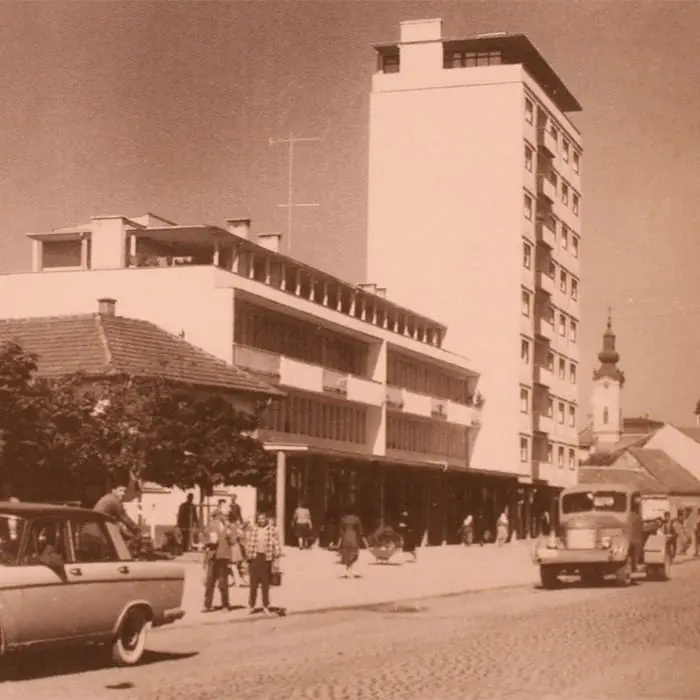
In front of the City Administration Building

Thousands of wonderful bird melodies in the gardens refresh the human soul and invigorate human health. Nearby there is a grove in which huge trees rise up to the sky.

Evliya Çelebi, travelogue, 1664

1804 – 1878

National awakening

The people of Semberija backed Karađorđe's uprising, and in 1809 Bijeljina and almost all of Semberija and Majevica were briefly freed. The greatest part was played by the rebel leaders Jakov Nenadović, Priest Luka Lazarević, Stojan Čupić and Priest Nikola Smiljanić.

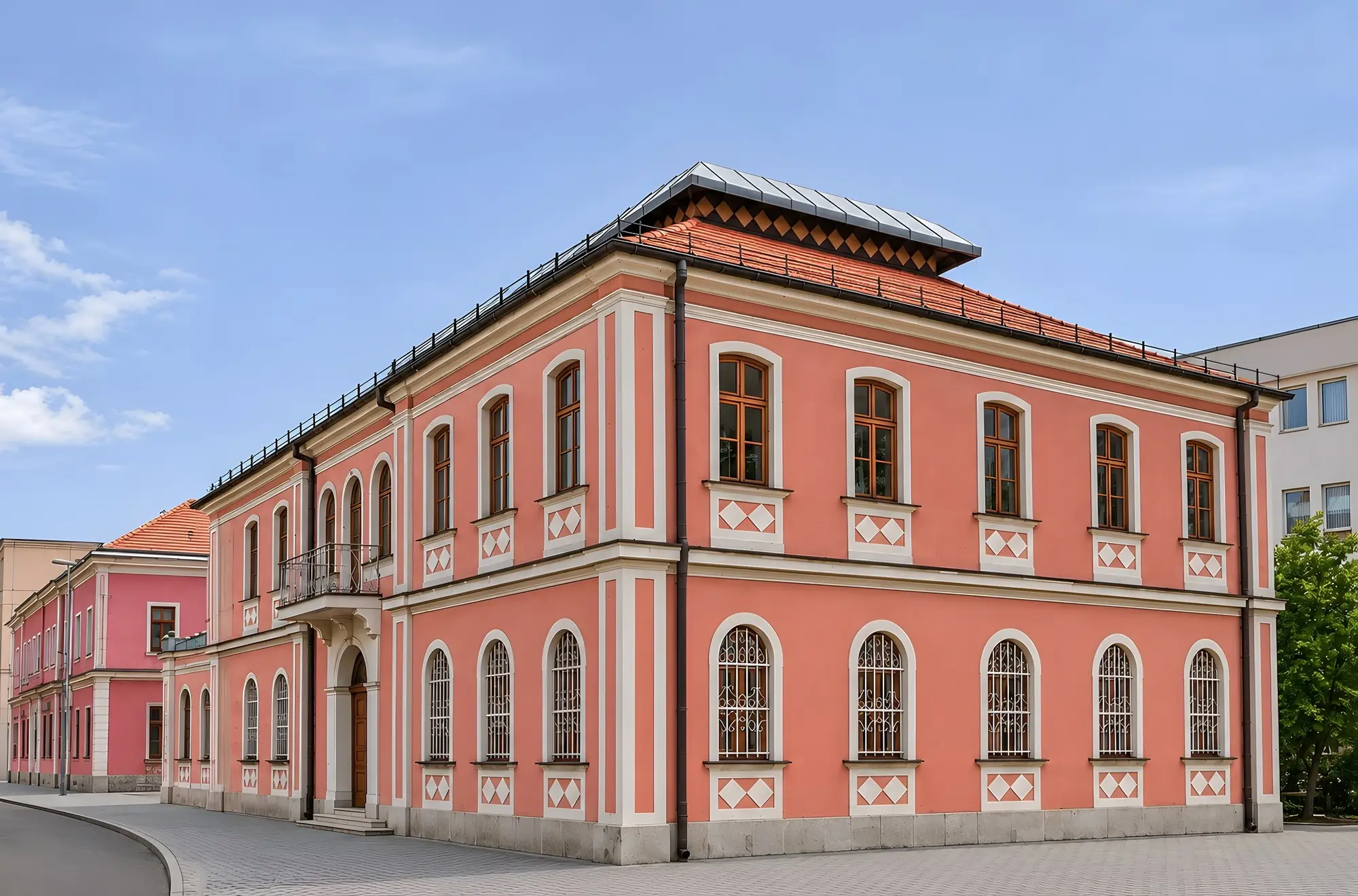
Despite the losses of the uprisings and the plague of 1814, the 1864 census made Bijeljina the largest town in the sanjak, with 6,074 people, more than Tuzla, Zvornik or Brčko. The two oldest buildings in town date from this time: the Orthodox Church of St George and the Konak, the Ottoman town hall that is now the Museum of Semberija. Attempts at liberation during the uprising of 1875–1878 failed.

  1. 1809Bijeljina briefly freed
  2. 1814Plague
  3. 1864Largest town in the sanjak: 6,074 people
Bijeljina in the past, archive photo

1878 – 1918

Austro-Hungarian rule

Austria-Hungary governed Bijeljina from 1878 to 1918. The 1879 census counted 1,602 houses and 6,090 people, making Bijeljina the fifth largest town in Bosnia and Herzegovina. It was a time of renewal, when the town took on the shape of a modern settlement.

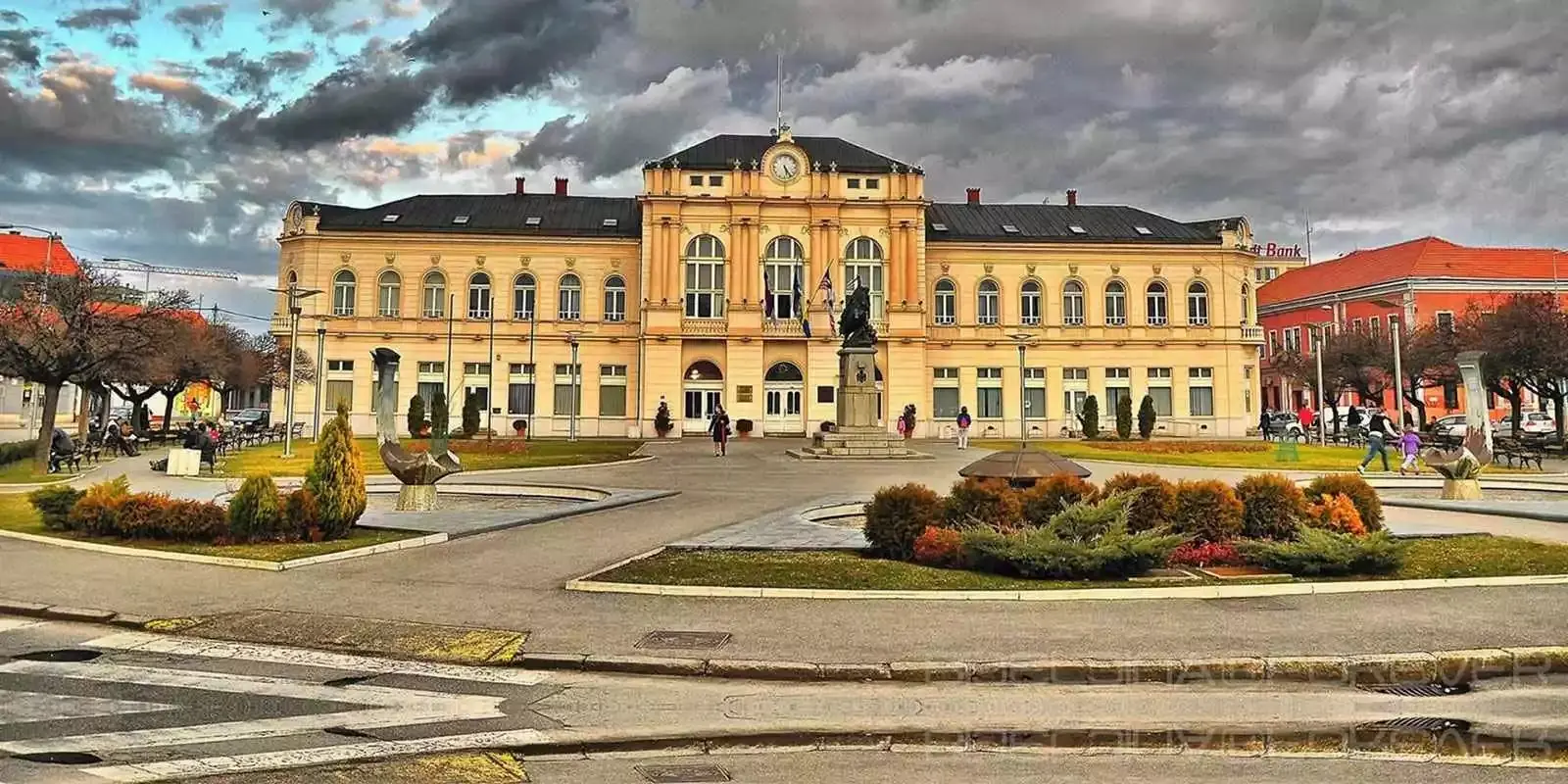
As early as 1879 Bijeljina became one of the first municipalities in the country with its own statute: streets were laid out, a grain market opened in the centre, weekly fairs were set for Tuesdays and Fridays, and annual fairs for St Panteleimon's Day and St Demetrius's Day. In 1880 the first petroleum street lamps were lit, and the first hospital and pharmacy opened. The City Administration Building, with the town's first public clock, went up in 1910.

  1. 1879Municipal statute and 6,090 people
  2. 1880First street lamps, hospital and pharmacy
  3. 1910City Administration Building
A town street, archive photo

1914 – 1918

Liberation

The First World War brought new suffering to the people of Semberija, constantly suspected of working with the Serbs across the Drina. The Austrian writer and journalist Egon Erwin Kisch, whose regiment was stationed in Bijeljina, bore witness to those days.

In 1918, after the breakthrough on the Salonika Front and the advance of the Serbian army, Austria-Hungary collapsed, and for the first time in the modern era Semberija knew lasting freedom.

  1. 1918End of the First World War, freedom

Notable figures

  • 1760–1840

    Knez Ivo od Semberije

    Prince Ivan Knežević, a byword for nobility in Serbian tradition. One of the two shield bearers on the city's great coat of arms.

  • 1767–1834

    Filip Višnjić

    The most famous Serbian gusle player, the bard of the First Serbian Uprising. The second shield bearer on the city's coat of arms.

  • 1783–1832

    Simo Katić

    From Dvorovi; in the First Serbian Uprising he commanded the border defence from Badovinci to where the Drina meets the Sava.

  • † 1813

    Zeko Buljubaša

    Jovan Gligorijević from Brodac, “the Serbian Leonidas”, who fell at Ravanj in the last battle of Karađorđe's uprising.

Bijeljina in the past

See the old photos album
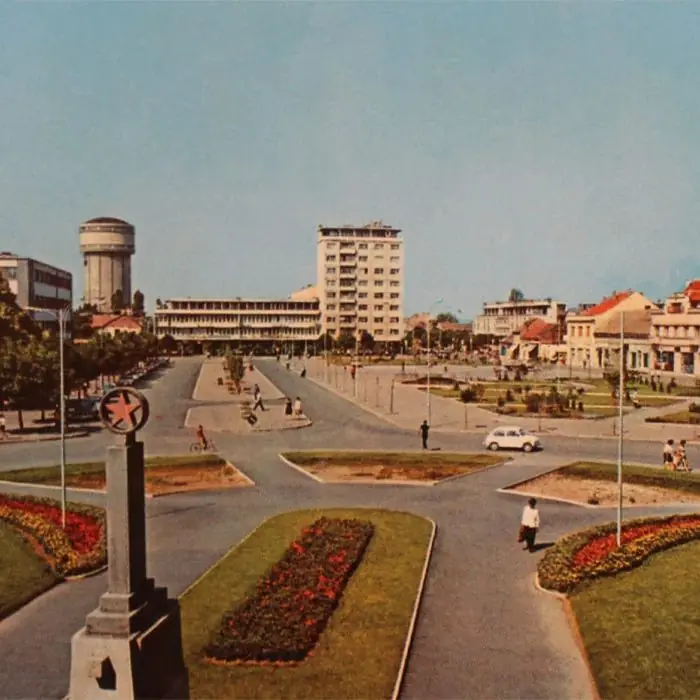
  • The main square, an old postcard
    The main square, an old postcard
  • The town centre from above
    The town centre from above
  • In front of the City Administration Building
    In front of the City Administration Building
  • A town street, archive photo
    A town street, archive photo
  • Bijeljina in the past, archive photo
    Bijeljina in the past, archive photo

Text source: Tourist Organisation of the City of Bijeljina. Photos: Tourist Organisation archive.